What is a deepfake and how do you recognize it?
In recent years, artificial intelligence technology has rapidly evolved, bringing significant benefits in numerous fields. However, the same technology can also be used for less ethical purposes. One example is the phenomenon known as deepfake, which has become increasingly prevalent on the internet, in social media, and even in disinformation campaigns. But what is a deepfake and how can you identify it before being misled?
What is a deepfake?
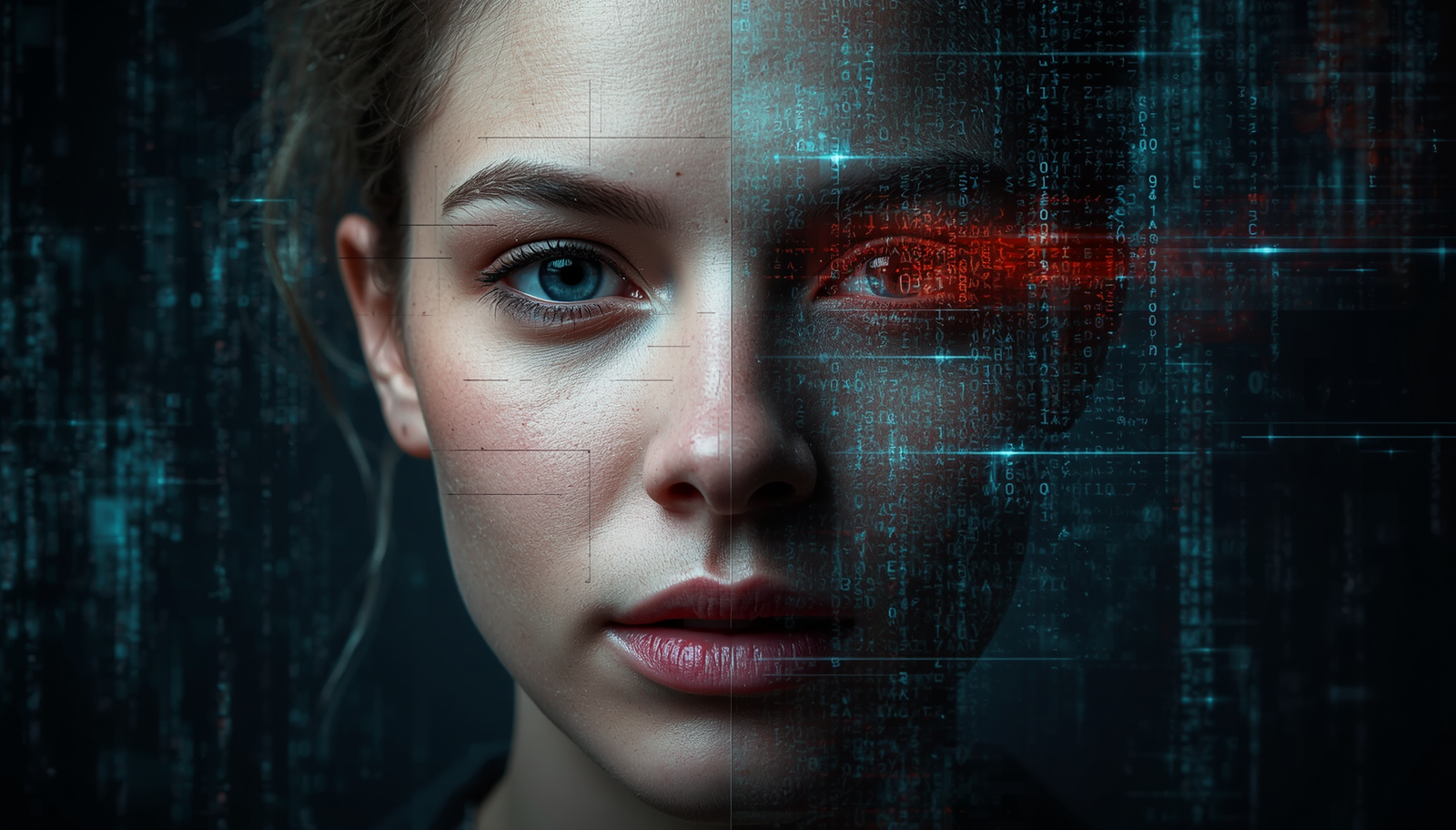
The term “deepfake” comes from the combination of the words “deep learning” and “fake.” A deepfake represents media content, video, image, or audio, created or modified with the help of artificial intelligence to appear authentic.
By using advanced machine learning algorithms, a creator can replace a person’s face in a video, generate a voice that almost perfectly imitates someone, or create completely fictitious images of people who do not exist in reality.
The result is often so convincing that it can deceive even experienced users.
How does deepfake technology work?
At the core of a deepfake are neural networks and AI models trained on large amounts of data, such as photographs, videos, and audio recordings of a person.
The process involves:
- Collecting images and videos of the targeted person.
- Training an AI model to learn facial features, expressions, and movements.
- Generating new content in which the person appears to make statements or commit actions that never happened.
In the case of audio deepfakes, artificial intelligence can reproduce the tone, accent, and rhythm of a person’s speech based on relatively short voice samples.
Why are these fakes dangerous?
Deepfakes can have legitimate uses in entertainment, filmmaking, or education. However, they are often used for malicious purposes.
Among the main risks are:
Disinformation
Fake videos with public figures can be used to spread false information and manipulate public opinion.
Financial fraud
Cybercriminals sometimes use artificially generated voices to impersonate directors, business partners, or family members and request money transfers.
Identity theft
Fake images and videos can be used to compromise a person’s reputation or create false identities.
Social manipulation
Deepfakes can generate confusion and affect public trust in information available online.
How do you recognize a deepfake?
Although technology is becoming increasingly sophisticated, there are some signs that may indicate that a video or image is faked.
Unnatural facial movements
Pay close attention to facial expressions. Sometimes, smiles, blinking, or eye movements seem artificial or are not synchronized with the rest of the face.
Asynchrony between voice and mouth movements
Many deepfakes exhibit slight delays between sound and lip movement. Even if the difference is subtle, it can be noticed upon careful analysis.
Inconsistent lighting
The light on the face may not match the overall lighting of the scene. Shadows and reflections often represent weak points of artificially generated content.
Visual anomalies
The edges of the face, hair, ears, or glasses may appear distorted, unclear, or may exhibit visual artifacts.
Robotic or unnatural voice
In the case of audio deepfakes, there may be unusual fluctuations in tone, artificial pauses, or a lack of natural emotion in the voice.
Check the source
One of the most effective verification methods is source analysis. If the video comes from an unknown account, an obscure platform, or an untrustworthy site, caution is advised.
Tools that help detect deepfakes
As the phenomenon has spread, solutions for identifying falsified content have also emerged.
Among the methods used are:
- AI-based tools that analyze visual and audio anomalies.
- Checking the metadata of files.
- Frame-by-frame analysis of videos.
- Fact-checking and information verification platforms.
Although no system offers 100% accuracy, using multiple verification methods can significantly reduce the risk of being deceived.
What should you do if you suspect a deepfake?
If you encounter a video or recording that seems suspicious:
- Do not share the content immediately.
- Check if the information is covered by reliable sources.
- Look for official statements from the involved person.
- Use fact-checking platforms.
- Compare the material with other authentic recordings.
A critical and careful approach is the best method of protection against digital manipulation.
The future of deepfakes and their impact on society
Research published in scientific journals and studies in the field of cybersecurity indicate that deepfake technology is evolving rapidly, and traditional detection methods are struggling to identify new generations of AI-generated content. At the same time, technology companies, media organizations, and authorities are developing solutions for identifying and authenticating digital content.
In the future, verifying the authenticity of images, videos, and audio recordings will become an essential skill for any internet user.
As artificial intelligence becomes more advanced, digital education and critical thinking will be the most effective weapons against falsified content. Thus, you will be able to navigate online safely and avoid traps created by digital manipulation technologies.