NVIDIA expands open-source AI models
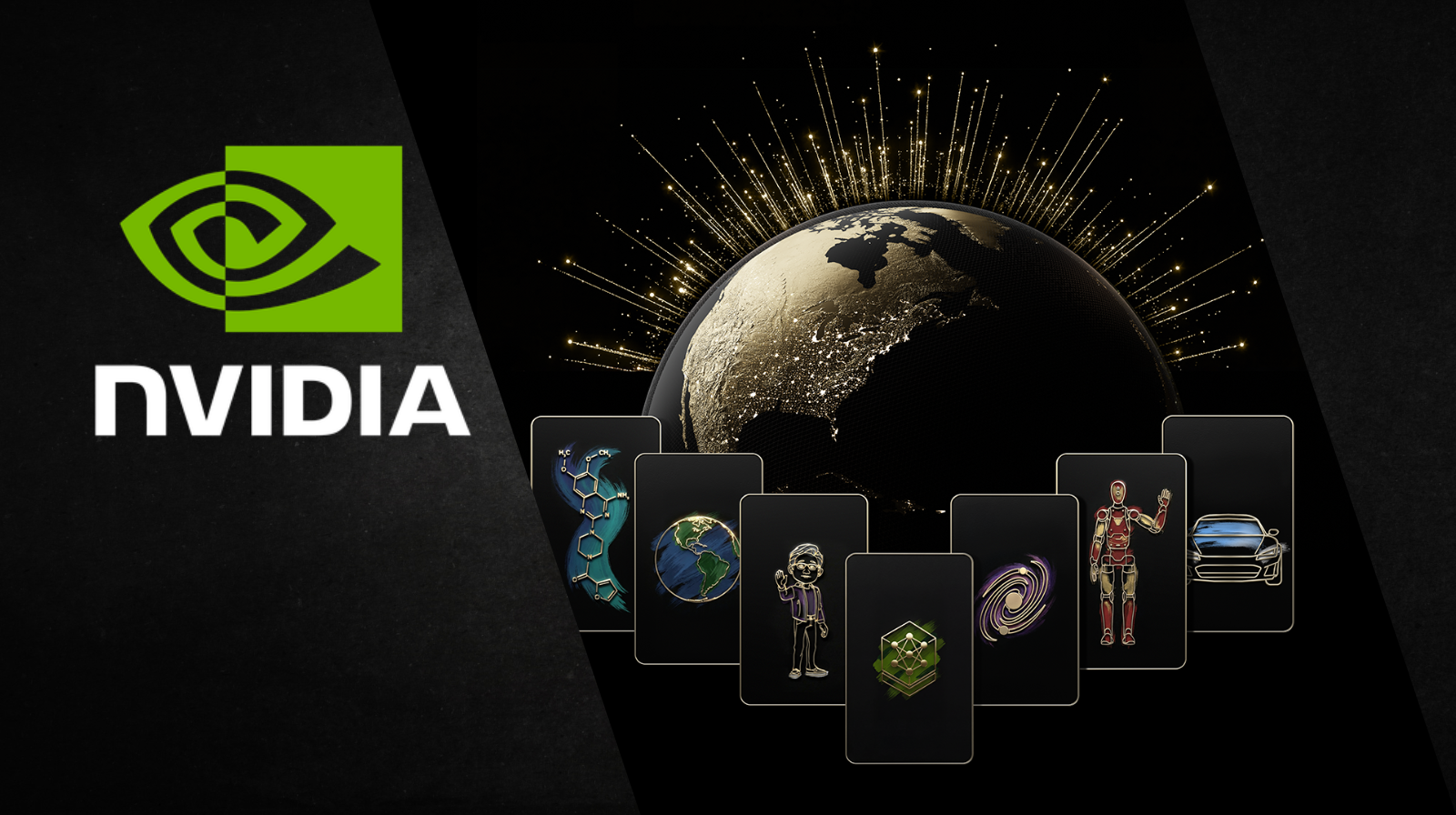
The artificial intelligence industry is evolving rapidly, and one of the most important recent announcements comes from NVIDIA. The company has revealed the expansion of its open-source model families, aiming to accelerate the development of a new generation of AI: agentic, physical, and dedicated to the medical sector. This step marks a major shift in how intelligent systems are built and used.
What is “agentic” AI and why is it important
Agentic AI represents an evolution from traditional models. Unlike chatbots or reactive systems, these models can make autonomous decisions, plan actions, and execute complex tasks without constant human intervention.
According to NVIDIA’s announcement, new models like Nemotron are designed to enable developers and companies to create “AI agents” capable of solving real-world problems, from automating business processes to industrial or medical applications.
This direction is considered one of the most important trends in AI, as it shifts the focus from simple responses to concrete actions.
Open-source AI models: the engine of global innovation
A central element of NVIDIA’s strategy is opening access to these models. By offering open-source models, the company encourages global collaboration and accelerates innovation.
New model families are available through platforms such as GitHub or dedicated cloud services, allowing developers to quickly integrate them into their own applications.
This approach has several benefits:
- democratizes access to advanced AI technologies
- reduces development costs
- stimulates the emergence of new products and services
In essence, NVIDIA is trying to create an open ecosystem around AI, similar to what open-source has done for software in recent decades.
Physical AI: integrating intelligence into the real world
Another important pillar is the development of models for “physical” AI. These are designed to control robots, autonomous vehicles, or other systems that interact directly with the environment.
NVIDIA has introduced specialized models such as Isaac GR00T, Alpamayo, and Cosmos, which can understand the surrounding environment and make real-time decisions, being used in robotics and complex simulations.
The concept of physical AI is essential for industries such as:
- industrial production
- logistics and transportation
- advanced robotics
- urban planning (smart cities)
Through these models, AI no longer remains solely in software but becomes an active component of the physical world.
Revolution in healthcare: the BioNeMo platform
One of the most promising areas targeted is healthcare. NVIDIA is expanding its NVIDIA BioNeMo platform, dedicated to biomedical research and drug development.
This platform enables:
- modeling proteins and biological interactions
- accelerating drug discovery
- analyzing complex clinical data
The goal is to reduce the time and costs required for treatment development. Practically, researchers can simulate complex biological processes with the help of AI, which was previously impossible on this scale.
In the current context, where the pharmaceutical industry is investing heavily in AI, such solutions can have a major impact on global health.
Security and control in the era of open-source AI agents
As artificial intelligence becomes autonomous, challenges related to security and control also arise. NVIDIA addresses these aspects by introducing software tools that provide control over AI agents and data protection.
These solutions include:
- privacy mechanisms
- control over agent decisions
- secure integration into enterprise infrastructures
Thus, companies can adopt AI without major security or compliance risks.
Impact of open-source AI models on the industry
NVIDIA’s expansion of open-source models comes at a time when competition in AI is more intense than ever. Through this strategy, the company strengthens its position not only as a hardware leader but also as a provider of complete AI platforms and ecosystems.
Moreover, the combination of agentic AI, physical AI, and artificial intelligence used for health research creates the conditions for a profound transformation of the global economy.
According to industry estimates, agentic AI could significantly increase productivity in areas such as medical research or product development in the coming years.
An important step towards the future of artificial intelligence
NVIDIA’s announcement marks an important step towards the future of artificial intelligence. By expanding open-source models and focusing on real-world applications, the company paves the way for a new era where AI not only assists humans but acts autonomously in the real world.
From intelligent robots to drug discovery, the impact of these technologies will be felt across almost all industries. The fact that these tools are becoming widely accessible could accelerate technological innovation in an unprecedented way.
Source: nvidia.com