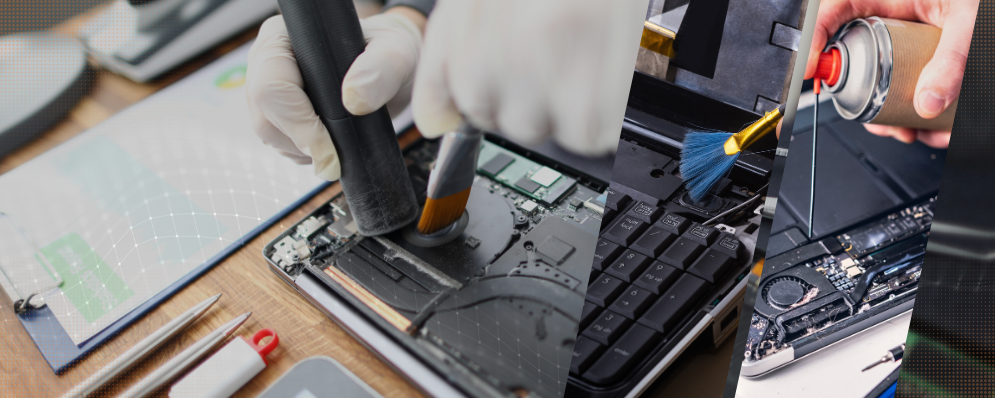
How are refurbished laptops tested?
The market for refurbished laptops has evolved significantly in recent years. While in the past they were seen as a “low-cost” alternative, today more and more companies and users choose refurbished equipment for the excellent balance of performance, cost, and sustainability.
But, in this context, the inevitable question arises:
How do you know that a refurbished laptop is truly reliable?
The answer lies in the inspection and testing process. An authentic refurbished laptop does not just mean a used product being resold, but rather equipment that undergoes a rigorous technical process of evaluation, refurbishment, and certification.
1. It all starts with the selection and evaluation of the equipment
The process begins at the moment of receipt. Equipment coming from operational leasing, corporate projects, or IT fleets is checked before entering the refurbishment circuit.
At this stage, the following are analyzed:
- the condition of the casing and external components
- the screen and keyboard
- the ports and connectivity
- the hardware configuration
- basic functionality (BIOS, fans, audio, Wi-Fi).
Products that do not meet technical standards are discarded or used exclusively for parts.
2. Refurbishment: more than just a simple cleaning
A common myth is that refurbished means just cleaned and put back on sale. In reality, the process includes hardware interventions and dedicated technical operations:
- internal and external cleaning;
- replacement of worn components;
- checking the SSD and RAM;
- checking the battery and cooling system;
- checking the screen for visual defects;
- reapplying thermal materials where necessary.
The goal is to restore the laptop to an optimal level of operation and stability.
3. Technical testing: the stage that validates performance
This is where the difference is made between a simple second-hand product and a certified refurbished laptop.
Each piece of equipment undergoes dedicated hardware and software tests, including:
- checking the RAM (Memtest)
- analyzing the health of the SSD and storage units
- CPU and GPU stability tests
- checking USB, HDMI, LAN, and audio ports
- testing the keyboard and screen
- checking wireless connectivity and integrated functions.
Only devices that pass all these checks reach the final stage.
4. Refurbished certification and preparation for use
After completing the tests, the laptop receives the operating system, necessary updates, and final performance checks. The process is completed with certification and warranty.
For the end user, this means:
- technically verified product
- stable operation
- warranty included
- lower cost compared to a new model.
Why are more and more companies choosing refurbished laptops?
Amid cost optimization and interest in sustainability, refurbished equipment is becoming a strategic choice for the business environment. Organizations can access enterprise configurations at significantly lower costs, without major compromises on performance.
Additionally, reusing equipment contributes to reducing electronic waste and extending the lifecycle of IT products.
A quality refurbished laptop is not just “a used laptop”. It is verified, tested, and certified equipment that undergoes a rigorous technical process before reaching the user.