Laptop vs tablet – what to choose in 2026?
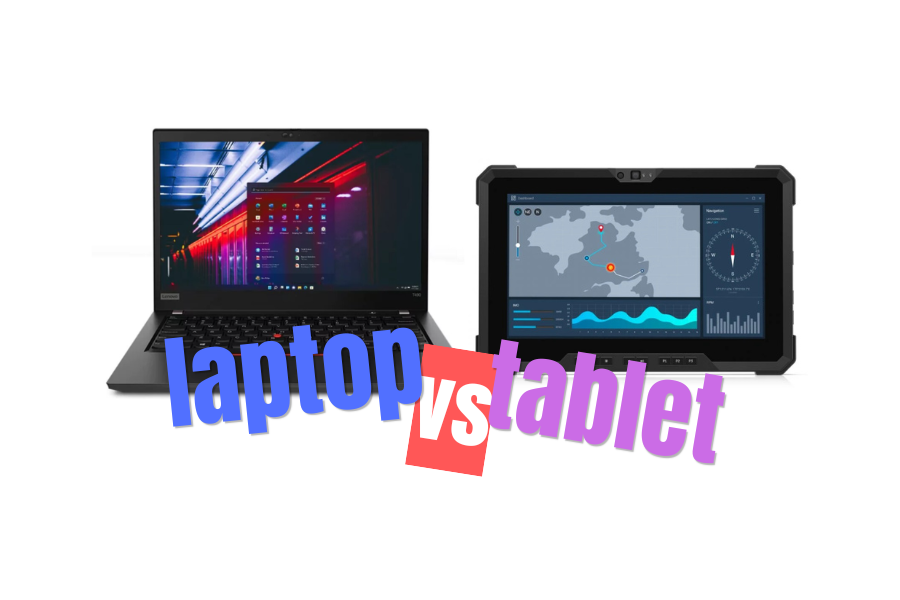
The choice between a laptop and a tablet remains one of the most common dilemmas when it comes to devices for work, school, or personal use. Although they may seem similar at first glance, the laptop vs tablet comparison highlights significant differences and directly influences productivity, comfort, and the types of activities you can perform.
In this article, we analyze the advantages and limitations of each option, so you can make an informed choice.
Laptop vs tablet – the fundamental difference
The basic difference between a laptop and a tablet lies in the way of use and level of productivity.
- The laptop is built for serious work, multitasking, and complex applications
- The tablet is designed for content consumption and maximum mobility
In other words, the laptop is a work tool, while the tablet is more of a device for consumption and quick interaction.
The laptop – productivity and power
A modern laptop offers a balance between performance and flexibility. It includes a physical keyboard, touchpad, and complete operating systems like Windows, macOS, or Linux.
Main advantages:
- advanced multitasking (multiple applications simultaneously)
- compatibility with professional software (Office, ERP, editing, programming)
- physical keyboard for efficient typing
- generally higher performance
- extensive connectivity (USB, HDMI, etc.)
Laptops are the natural choice for office work, freelancing, programming, or any activity that requires real productivity.
The tablet – mobility and simplicity
Tablets are extremely portable devices with a touchscreen and simplified interface. They are ideal for quick use and content consumption.
Main advantages:
- very lightweight and portable
- good battery life
- perfect for browsing, video, social media
- intuitive interface, based on touch technology
- very lightweight and portable
- good battery life
- perfect for browsing, video, social media
- intuitive interface, based on touch technology.
However, the tablet has significant limitations when it comes to intensive work or professional applications.
Productivity: the difference that matters most
If we discuss real productivity, the laptop remains clearly superior.
For example, a laptop like Lenovo ThinkPad T490 is designed for:
- working with complex documents
- advanced Excel
- business applications
- intensive multitasking.
In contrast, a tablet is more suitable for:
- reading emails
- watching content
- quick notes
- simple presentations.
Laptop vs tablet – keyboard vs touchscreen
Another major differentiator is the mode of interaction:
- Laptop: physical keyboard + touchpad → ideal for extensive typing
- Tablet: touchscreen → ideal for quick interaction
For users who type a lot (reports, emails, documents), the laptop is much more efficient.
Software and compatibility
Laptops run complete operating systems, which means access to:
- professional applications
- development software
- complex business tools.
Tablets, on the other hand, are limited to mobile applications, even though they have evolved significantly in recent years.
Mobility: the clear advantage of the tablet
If your priority is absolute mobility, the tablet wins:
- lighter than any laptop
- starts instantly
- ideal for use on the go.
However, this mobility comes with a compromise in productivity.
Laptop vs tablet, what do you choose?
The right choice depends on usage:
Choose a laptop if:
- you work in an office or remotely
- you need multitasking
- you use complex applications
- you write a lot.
Choose a tablet if:
- you consume content (video, social media, browsing)
- you need a secondary device
- you want maximum portability.
The differences between a laptop and a tablet are clear: the laptop is about productivity, the tablet is about mobility and content consumption.
For serious work, a laptop remains the obvious choice, as it offers stable performance and reliability in daily use. In the end, there is no “better” option, only the right choice for your needs.