Artificial intelligence vs employees: why AI costs more
In recent years, artificial intelligence (AI) has been presented as the ideal solution for cost efficiency and process automation. However, reality is beginning to contradict this perception: in many cases, AI ends up being more expensive than human employees. Nevertheless, large companies do not consider this a disadvantage; they even see it as a strategic investment.
The real costs of AI: more than a subscription
At first glance, using AI seems affordable. Most platforms offer standard subscriptions, around $20 per month, or premium plans that reach $200. However, the true costs appear in advanced usage, based on tokens, the computational units used by language models.
These costs increase rapidly, especially in the case of:
- programming assistants (such as GitHub Copilot or Claude Code),
- AI agents that automatically run complex processes,
- repetitive tasks programmed to run constantly.
For companies, this model means a continuous expense, not a fixed one. The more intensely AI is used, the more the bill increases.
Industry statements: AI surpasses employee costs
Bryan Catanzaro, Vice President at Nvidia, stated that, for his team, the cost of AI infrastructure exceeds employee salaries. A surprising statement, especially coming from a company that develops hardware for AI.
The same idea is supported by Praveen Naga, CTO at Uber, who acknowledged that estimated AI budgets have already been exceeded.
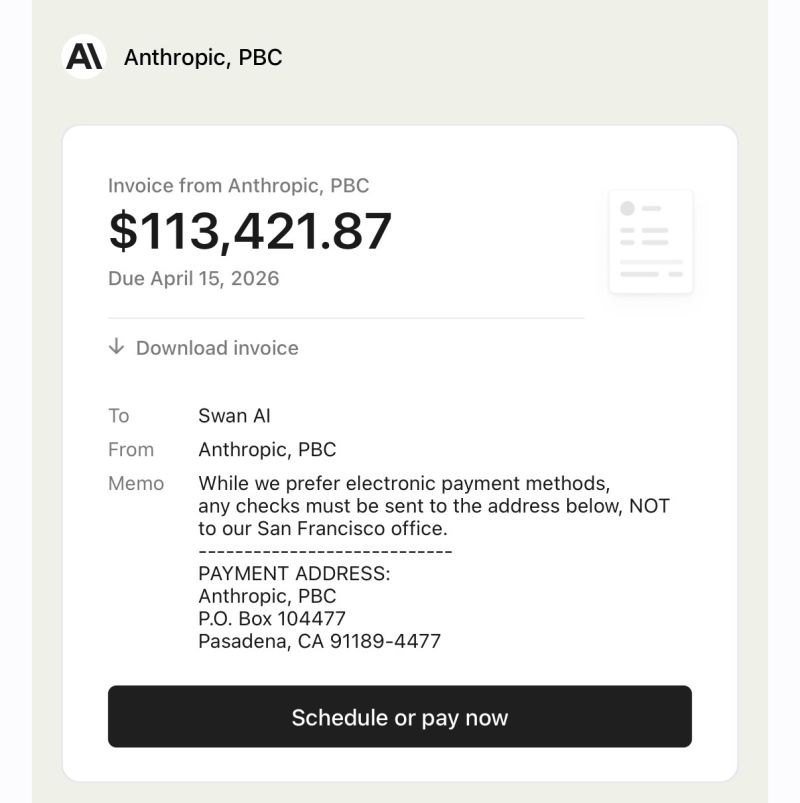
Similarly, a startup (Swan AI) reported a bill of $113,000 for using AI in a team of only four people, equivalent to approximately $28,000 per employee monthly.
AI vs. humans: who wins?
A 2024 MIT study showed that in 77% of cases, work performed by humans is preferable, both qualitatively and quantitatively, to that performed by AI. This raises serious questions about the real efficiency of automation.
However, the discussion is not that simple. Although AI can be more expensive in the short term, companies see it as a long-term investment.
Why do companies continue to invest in AI?
Even in the face of high costs, many CEOs consider these expenses justified. The main reason: technological progress and the potential for complete automation.
For example:
- Uber estimates that 11% of code updates are already generated by AI.
- A new direction is emerging: software engineering based on AI agents.
- Nvidia encourages intensive use of AI (not surprisingly), considering that employee productivity is directly linked to token consumption.
In this logic, AI does not completely replace employees immediately, but rather functions as a “force multiplier,” increasing their efficiency.
Three possible scenarios for the future of AI
Based on current trends, three scenarios are emerging:
1. Complete automation (long-term)
Companies are currently investing heavily in AI to reduce costs later by eliminating a large part of the human workforce.
2. Coexistence of artificial intelligence + employees
AI becomes a complementary tool, increasing employee productivity without completely replacing them.
3. Failure of AI implementation
Many companies implement AI without a clear strategy, leading to significant financial losses.
Recent studies show that most firms adopting AI without rigorous planning end up losing money.
The real problem is not artificial intelligence, but implementation
An essential aspect is how AI is used. Even the most advanced technology cannot compensate for the lack of a clear strategy or well-defined requirements.
As expert Edward Berard said:
“Software development is easy if the specifications are fixed.”
In reality, however, requirements change constantly, and AI is not yet flexible enough to perfectly manage this dynamic.
Artificial intelligence: investment or illusion?
Artificial intelligence is, without a doubt, one of the most important technologies of the moment. However, the idea that AI automatically reduces costs is a myth.
In the short term, artificial intelligence can even be more expensive than employees. In the long term, however, it could completely transform how companies operate.
It remains to be seen whether this transition will lead to real efficiency or merely a redistribution of costs.
Source: tomshardware.com